
Description
🍵 Green Tea🇯🇵 Japanese Steamed☕ Low–Medium Caffeine🌿 Loose Leaf
The everyday Japanese cup — bright, grassy, steamed-leaf green tea. The standard against which other green teas are measured.
Sencha is the most-consumed green tea in Japan — the daily cup, the workplace pour, the after-meal wash. What separates it from Chinese green teas is one step: instead of being pan-fired, sencha leaves are briefly steamed within hours of harvest. The steam halts oxidation while preserving the bright green chlorophyll, which gives sencha its signature vivid colour and grassy character.
The Sampson sencha is a standard daily-drinking grade — restrained enough that the vegetal notes come through clearly, structured enough to handle a second steep. Brews bright yellow-green, smells of fresh-cut grass and steamed greens, finishes clean with a faint sweetness on the back of the tongue.
🇯🇵
Steamed, Not Fired
Japanese-method processing keeps chlorophyll intact
🌱
Grassy & Bright
The signature vegetal character of fresh sencha
🌡️
Low-Heat Brew
70–75°C — boiling water makes sencha bitter
✨The Sampson Promise
We only put ingredients in our products that we would use on our own family. Every ingredient has a purpose. If it doesn’t need to be there, it isn’t.
Type
Green Tea, Steamed
Caffeine
Low–Medium
Origin
Japan
Format
Loose Leaf
Steep Time
1–2 min
Servings
~25 cups (50g)
Tasting Notes
🌱
Fresh-Cut Grass
Aroma
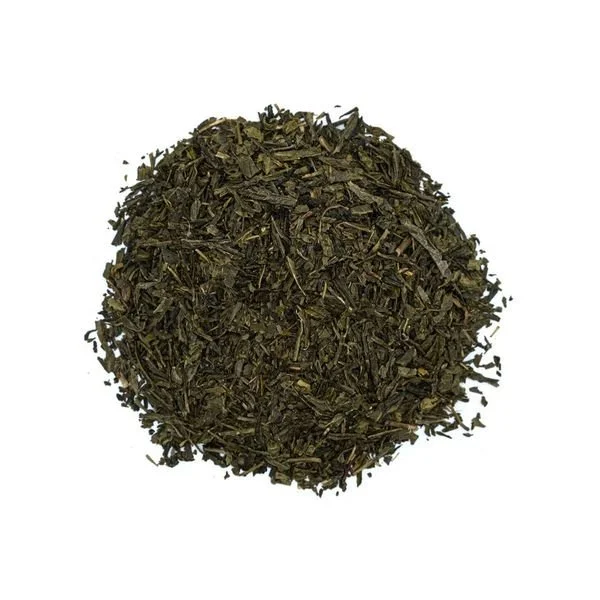
The dry leaf is dark green and faintly seaweedy; the brewed cup smells of cut grass and steamed spinach. Cleaner and brighter than any pan-fired Chinese green.
🍵
Vegetal & Brothy
Body
A clean vegetal taste — closer to a light vegetable broth than to a flowery tea. The body is light but not thin; there’s a soft umami undercurrent that’s distinctly Japanese.
🍯
Sweet Finish
Aftertaste
The grass clears and a faint sweetness lands at the back of the tongue. Drink it cooler than you think — that’s where the sweetness opens up.
How to Brew
01
Measure
One level teaspoon (about 2g) per 6oz cup. Sencha is potent and fast-extracting — less leaf than you’d use for black tea.
02
Cool the Water
Bring water to a boil, then pour into another vessel and let it cool to about 70–75°C (158–167°F). Boiling water is the most common sencha mistake — it pulls bitter tannins from the steamed leaf.
03
Steep 1–2 Minutes
One minute for a delicate first cup, two for fuller body. Strain immediately — sencha turns bitter past three minutes. The leaves can be re-steeped at slightly higher temperature for a second cup.
Water
70–75°C
Time
1–2 min
Per Cup
1 tsp
Sencha is built for re-steeping. The second cup at slightly hotter water (80°C, 30 seconds) often shows nuance the first cup hides.
About the Tea
🍃
Steamed Leaf
The Leaf
Tea leaves picked from Camellia sinensis bushes in Japan, briefly steamed within hours of harvest, then rolled into needle-like shapes and dried. Dark green, slightly glossy, with the faint sea-vegetable note that distinguishes Japanese greens from Chinese.
🇯🇵
Japanese Method
The Process
Steaming (asamushi or chumushi) versus pan-firing is the single biggest divergence between Japanese and Chinese green-tea processing. Steam locks in chlorophyll and a fresh-vegetable character; pan-firing produces toastier, nuttier flavours. Sencha is the steamed-tea benchmark.
🌡️
Cool Brew Discipline
The Discipline
Sencha demands cooler water than other teas. The leaf is delicate, the chemistry shifts above 80°C, and the boiling-water habit imported from English tea-making is what most people get wrong. Get the temperature right and the cup is sweet, vegetal, clean.
In the tin
Steamed green tea leaves.
Origin & Sourcing
Sourced from green-tea-producing regions of Japan, processed in the standard sencha method — fresh-leaf steaming, rolling, drying. Packed in small batches for the Sampson shelf.

Reviews
There are no reviews yet.