
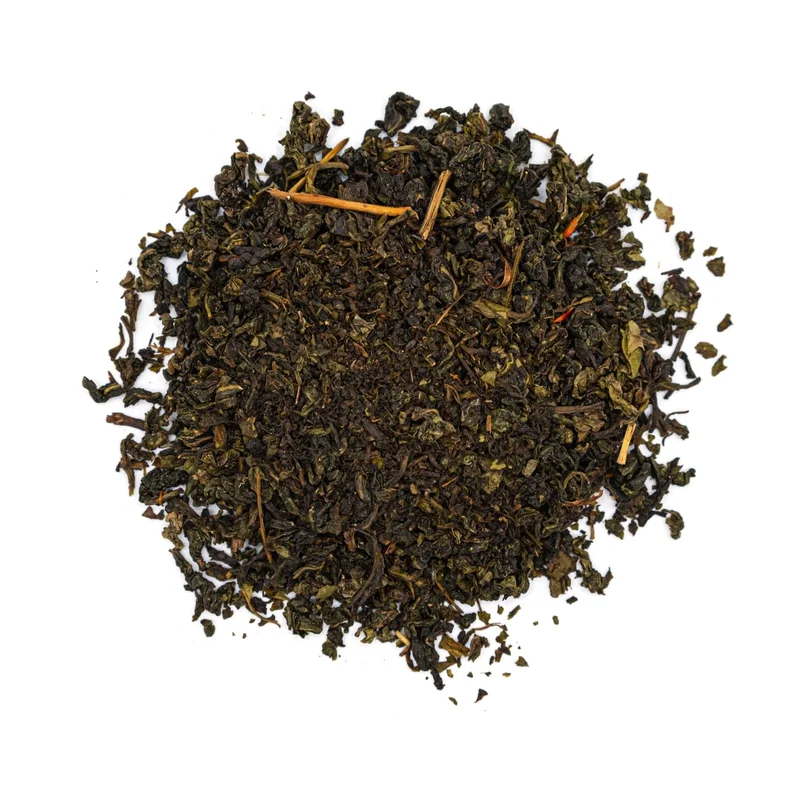
Description
🌿 Oolong🍃 Semi-Oxidized☕ Lower Caffeine🌿 Loose Leaf
The middle-tea cup — Chinese oolong (wu-long), the semi-oxidized leaf between green and black, smooth and slightly toasty.
Oolong — wu-long, “black dragon” in Chinese — sits in the middle of the tea spectrum: more oxidized than green tea, less than black. The leaf is partially withered, partially bruised, partially fired and partially oxidized in a careful sequence that the Chinese tea tradition has refined over centuries. The result is a smooth, slightly toasty cup with the floral character of green tea on top of a fuller body that approaches black tea without the weight.
In Chinese kitchens oolong is the cup that lives next to the table — sipped between courses across long dinners, kept hot in a small pot rather than brewed cup-by-cup, often re-steeped four or five times across an evening. Lower in caffeine than a black tea, smoother than a green, the kind of tea that doesn’t pick a side.
🍃
Semi-Oxidized Leaf
Between green and black — smooth, toasty body
☕
Lower Caffeine
Lighter than black, drinks across the day
✨
Re-Steeps 4–5 Times
The Chinese-kitchen between-meal cup
✨The Sampson Promise
We only put ingredients in our products that we would use on our own family. Every ingredient has a purpose. If it doesn’t need to be there, it isn’t.
Type
Oolong (semi-oxidized)
Caffeine
Low–Medium
Best Time
Anytime, with food
Format
Loose Leaf
Steep Time
3 min
Servings
~25 cups (50g)
Tasting Notes
🍃
Toasty Floral Top
Aroma
The aroma reads slightly toasty up top — the firing note that defines oolong — with a faint orchid-like floral underneath. Cleaner than a black tea, fuller than a green.
🌿
Smooth Round Body
Body
The body sits in the middle space oolong owns — smooth, slightly buttery, with a clean toasty edge. No astringency, no bitterness, the cup that drinks easily through a long meal.
✨
Long Clean Finish
Aftertaste
Closes clean, lightly sweet, with the long lingering aftertaste — what Chinese tea drinkers call “hui gan” — that good oolong is meant to leave behind. The cup keeps tasting after the sip ends.
How to Brew
01
Measure
One heaped teaspoon (about 2–3g) per 8oz cup. Oolong leaf is rolled and dense — the ball-shaped leaves unfurl as they steep.
02
Heat to ~85°C
Boil and let stand 30 seconds. Oolong likes it slightly hotter than green but not full-boil — 85°C lets the leaf unfurl without pulling bitterness out.
03
Steep 3 Minutes
Three minutes for the first pour. Re-steep four or five times across a meal — each pour stays distinct, and the leaf gives a different cup each time.
Water
~85°C
Time
3 min
Per Cup
1 heaped tsp
Drink it the Chinese way — small cups, not mugs, and re-steep. The first pour is the brightest; the second is the smoothest; the fourth is the gentlest. The cup changes through the meal.
About the Tea
🍃
Chinese Oolong
The Whole Cup
Semi-oxidized tea leaves from China — the “wu-long” style sits between green and black on the oxidation spectrum, partially withered and partially fired in the centuries-old Chinese tradition. The leaf is rolled into small balls that unfurl during steeping.
🌿
Single Ingredient
The Process
Just the leaf — no blend, no flavour. The character of the cup comes from the processing rather than additions: a careful sequence of withering, bruising, partial oxidation and firing that gives oolong its distinctive smooth-toasty profile.
✨
Multiple Re-Steeps
The Tradition
The Chinese way of drinking oolong is to re-steep the same leaves four or five times across a meal, each pour shorter than the last. The leaf gives a different cup each time — the bag stretches further than green or black.
In the tin
Chinese oolong tea.
Origin & Sourcing
Single-ingredient Chinese oolong — semi-oxidized leaf in the wu-long tradition, the in-between tea that sits across the table from green and black. Smooth, slightly toasty, designed to re-steep across a meal, blended in small batches for the Sampson shelf.


Reviews
There are no reviews yet.